

Key Takeaways
- High blood sugar can damage tiny blood vessels in the back of the eye.
- Blurry vision and dark spots often signal early changes in your sight.
- A dilated eye exam can help catch problems before vision loss happens.
- Healthy eating habits and regular exercise support your overall eye health.
- Early treatments can slow down damage and help keep your vision clear.
If you have been diagnosed with diabetes, you may be wondering how it could affect your vision over time. At Total Vision Diamond Bar, our team understands how concerning a change in your health can feel, but we’re here to help you understand the impact diabetes can have on your eyes.
Diabetic retinopathy is a complication of diabetes that affects the blood vessels in the retina, the light-sensitive tissue at the back of the eye. In its early stages, it often causes no noticeable symptoms, but you can help prevent vision loss through routine eye exams and careful blood sugar management. When diabetes affects how your body handles sugar, those changes can also affect your eyes, making regular diabetic eye exams an important part of maintaining your overall health.
The Connection Between Diabetes and Eye Health
How High Blood Sugar Affects the Retina
Your retina is the light-sensitive layer at the back of your eye. Over time, high blood sugar levels can harm the tiny blood vessels that supply oxygen and nutrients to this sensitive tissue.
When these tiny tubes take damage, they can leak fluid or bleed into the eye. This fluid buildup swells the central area of the retina, which can make your vision look blurry or distorted.
In response to reduced oxygen supply, the retina may begin growing new blood vessels. The problem is that these new vessels can be very weak and fragile, breaking down and leaking even more blood, restarting the whole problem.
Who Is at Risk for Vision Loss?
Anyone diagnosed with type 1 or type 2 diabetes can develop this eye condition, and it can also increase your risk for other eye complications. Your risk goes up the longer you live with diabetes, but managing your condition consistently helps protect your sight.
Other health factors also play a huge role in your eye health. High blood pressure puts extra strain on the blood vessels in your eyes, and high cholesterol also increases your chances of experiencing vision problems later on.
Signs and Symptoms to Notice
Subtle Signs to Notice
In the early stages, you might not notice any changes to your vision at all. The condition often progresses quietly before it affects how clearly you see. Try to pay attention to these small changes:
- Mild blurriness that can make reading fine print or seeing far away difficult
- Focus issues that make transitioning from close up to far away hard
- Vision shifts where sight is clear one day and blurry the next
Later Symptoms
As the diabetic retinopathy progresses further, the symptoms may become much more obvious. Leaking blood vessels can create noticeable blocks in your sight, affecting your daily activities.
It’s a good idea to schedule an appointment with your eye doctor if you notice:
- Dark floaters or strings moving across your line of sight
- Empty or blank patches right in the center of your vision
- Sudden changes involving a rapid loss of clear sight
Diagnosis and Care
What Happens During a Dilated Exam
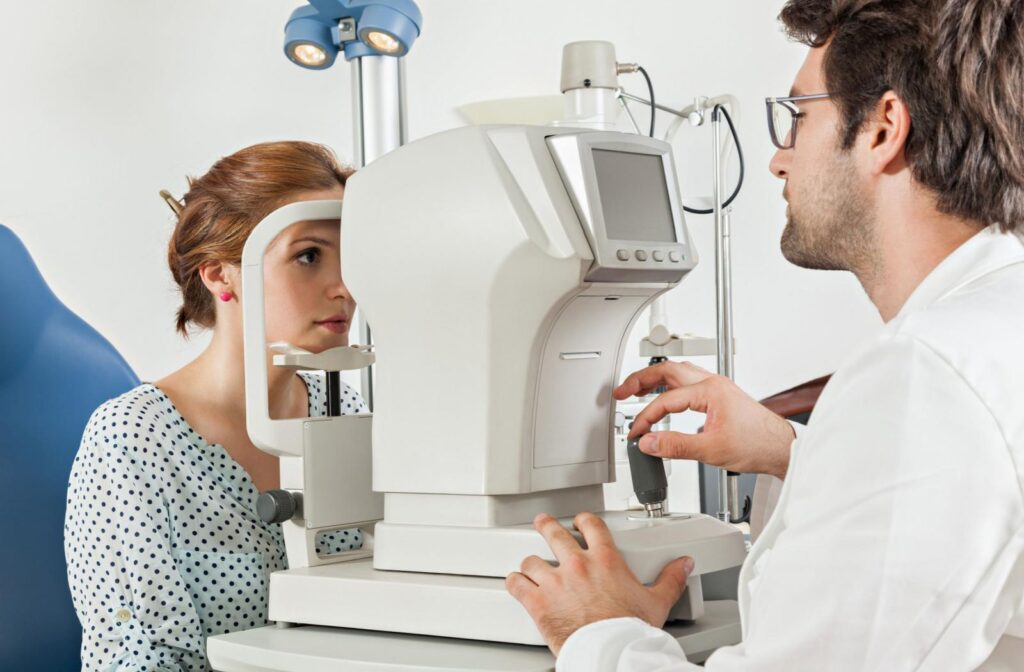
A regular vision test just checks how well you read letters on a chart, but a comprehensive dilated eye exam helps an eye doctor in Diamond Bar look deep inside your eye. This detailed checkup can help detect tiny changes before you notice any blurriness.
Special drops will dilate your pupils so that the eye doctor can get a clear view of your retina. This helps them check in as much detail as possible for any signs of damage.
When to Schedule a Visit
Though everyone is different, and your eye doctor can recommend a personalized schedule for your needs, it’s generally recommended to get a comprehensive eye exam at least once a year. Annual visits help the eye doctor track the health of your retina over time. Catching problems early gives you the most options for preserving your sight.
Some situations require more frequent visits. For example, you should call the clinic right away if your vision suddenly gets blurry or spotty, or if you experience intense pain. Pregnant women with diabetes also need extra eye checks because pregnancy can speed up changes in the blood vessels.
Nutrition and Daily Habits for Retinal Health
Foods for a Healthy Retina
What you put on your plate can impact your whole body over time. Foods that help manage your blood sugar levels also protect your vision.
Focus on eating plenty of vegetables, lean proteins, and other foods that support stable blood sugar levels. Avoiding excess sugar helps prevent sudden spikes in blood sugar that can damage your retina.
Steps for Daily Life
Your daily routines play a huge role in protecting your sight. Keeping your blood pressure in a normal range takes pressure off the vessels in your eyes, and a healthy cardiovascular system means a steady flow of oxygen reaches your retina.
Physical activity helps your body use insulin properly. Many health organizations recommend aiming for about 150 minutes of moderate physical activity per week, though your healthcare provider can recommend what’s appropriate for you. Quitting tobacco also lowers your risk of developing eye complications down the road.
Treatment Options to Protect Your Sight
Life with Diabetic Retinopathy
A diagnosis doesn’t mean you automatically lose your sight. In fact, many people maintain clear vision for years by following their care plan carefully.
Maintaining control over your blood sugar remains your main defense against future damage. Partnering with our eye care team means you have professionals to help you track your progress and adjust your routine.
Medical Treatments
As the condition progresses, medical treatments can help preserve your sight. Certain medications injected into the eye can help reduce swelling in the retina and slow the growth of abnormal blood vessels.
Other procedures focus on the leaking vessels themselves. Laser therapy helps shrink abnormal blood vessels and seal leaks to reduce swelling. For severe bleeding or scar tissue, surgery can clear the center of your eye so light can pass through normally.
Schedule Your Next Eye Exam
Protecting your vision starts with a simple appointment. Our team at Total Vision Diamond Bar has access to innovative treatment techniques to help everyone in your family with their visual health. Schedule your eye exam today to stay proactive about your retinal health.