

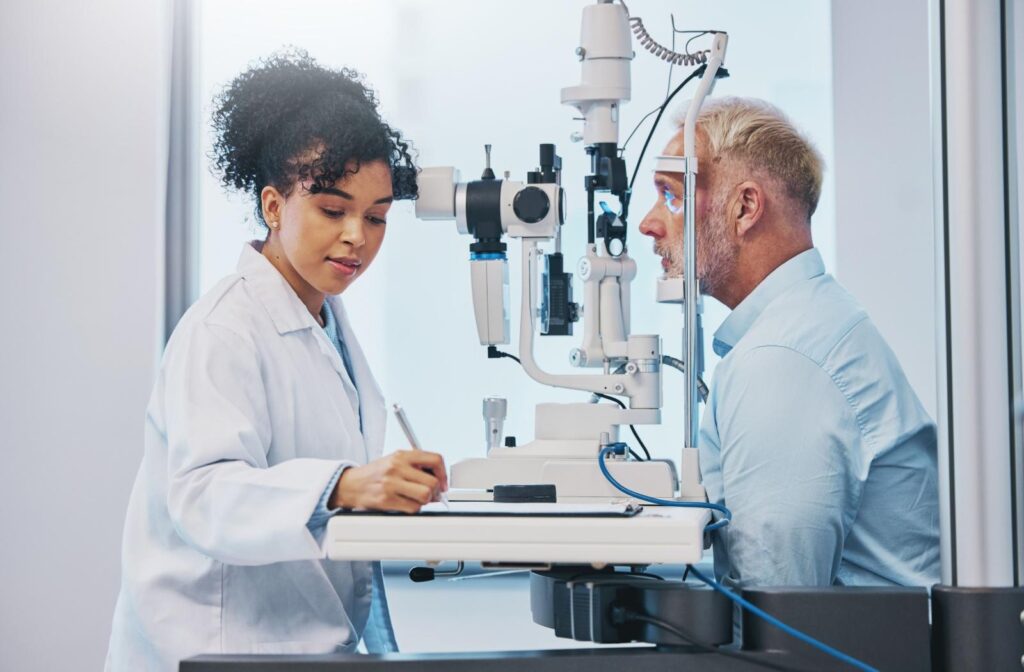
As you grow older, your body goes through natural changes, and your eyes aren’t an exception. You might notice that your current glasses don’t provide the sharp focus you need.
Five common eye problems that can develop as you age include:
- Cataracts
- Macular degeneration
- Glaucoma
- Diabetic eye disease
- Dry eye syndrome
Book routine visits with your optometrist to help uncover these changes early. Take proactive care of your eyes and maintain clear sight for your daily routines.
Cataracts
Your eyes undergo natural changes over the years that affect exactly how light enters them. Think of the natural lens inside your eye like a camera lens. It needs to remain perfectly clear to focus properly on the world around you. As you age, the proteins inside this natural lens break down and clump together. This biological process makes the lens less flexible and can turn it completely cloudy, making the world look a bit like a foggy window. This is called a cataract.
Get regular eye exams to track early cataract progression so you can manage your sight effectively. Look out for these symptoms:
- Hazy or blurry vision when looking at objects
- Poor night vision while driving in the evening
- Faded or washed-out colors in natural sunlight
- Increased sensitivity to bright glare
Macular Degeneration
You rely on the highly sensitive central part of your retina, called the macula, to thread a needle or spot a friend across a crowded room. Macular degeneration affects this specific area and reduces your sharp, forward-facing vision for detailed tasks.
This condition can be categorized as “dry” or “wet”. The dry type involves a gradual thinning of the macula and may present no early symptoms, while the wet type involves abnormal blood vessels leaking fluid under your retina and can progress rapidly. Both types require different treatments and ongoing management to maintain your eye health.
Monitor your eyes for these warning signs:
- Straight lines that appear wavy or distorted
- Fuzzy or shadowy central vision when you look straight ahead
- Familiar faces that appear blurry even in clear lighting
- A dark or empty area appearing in the center of your vision
Glaucoma
Your eyes contain natural fluid that keeps them plump and healthy. This fluid continuously circulates to maintain proper eye function. Poor drainage creates a dangerous fluid buildup inside the eye, raising your internal eye pressure and slowly damaging your optic nerve over time.
The most common type, open-angle glaucoma, often shows zero early symptoms, making regular eye exams highly beneficial for your long-term sight. Pay attention to these possible signs:
- Side vision that slowly narrows over time
- Difficulty navigating while walking through tight spaces
- Noticeable blind spots in your peripheral visual field

Diabetic Eye Disease
Your daily diet and blood sugar levels play a huge role in your overall eye health. High blood sugar can heavily affect the delicate retinal blood vessels over time. This continuous damage causes them to weaken, swell, and leak fluid or blood directly into your eye. Diabetic retinopathy is a common form of this condition that can severely impact your daily independence.
By properly controlling your blood sugar, you can slow the progression of this disease and protect your valuable vision. Contact an eye doctor right away if you experience these noticeable changes:
- Sudden double vision when trying to focus
- One or more dark spots floating across your sight
- Color vision that becomes notably impaired over the years
- Fluctuating blurry vision that changes throughout the day
Dry Eye Syndrome
Your eyes need a constant, healthy layer of moisture to stay comfortable and clear throughout the day. Hormonal changes can easily lower your natural tear production, leaving your eyes feeling parched and irritated. Furthermore, your tear film consists of different layers, including essential oils that prevent evaporation.
When these oils decrease, low-quality tears evaporate too quickly from the eye surface. Talk to your optometrist about custom dry eye treatments to keep your eyes hydrated and happy. Watch for these common signs of discomfort:
Your eyes need a constant layer of moisture to stay comfortable throughout the day. Natural physical changes can disrupt normal tear production. The doctor can provide solutions to keep your eyes hydrated.
- A sandy or gritty feeling when you blink
- A mild burning sensation in dry environments
- Heavy watering from reflex tearing
- Stringy mucus in or around your eyes
Keep Your Eyesight Ready for Anything
Taking proactive care of your eyes can protect your sight for many years to come. Routine eye exams are one of the best tools for detecting minor issues before they turn into major hurdles that disrupt your life.
Fortunately, you don’t have to figure it out alone. With professional guidance from the knowledgeable team at Total Vision Diamond Bar, you can manage these natural changes effectively and get back to enjoying your favorite hobbies without frustration.
Schedule an appointment today and discover how bright the future can be!