


Tired eyes by the end of the day rank among the most common complaints an optometrist hears. It’s easy to write it off as normal wear and tear, but the discomfort usually traces back to something specific, not just a long day.
Your eyes feel tired at the end of the day because they’ve spent hours doing close, repetitive work, often paired with a lower blink rate and, sometimes, a prescription that no longer fits your vision. A lot of it comes down to daily habits you can adjust or booking an overdue eye exam.
Common Signs to Watch For
Tired eyes rarely show up on their own. Here are some symptoms that tend to tag along:
- Sore, watery, or burning eyes
- Sensitivity to light
- Neck or shoulder aches
- Occasional headaches
- Blurry vision that clears once you blink or look away
Everyday Reasons Your Eyes Feel Worn Out
Most tired-eye days come down to a handful of ordinary habits. Once you spot the pattern, you can start changing it.
Screen Time and Digital Strain
When you stare at a phone or laptop, you blink far less than usual, which dries out your eye surface and increases irritation. Focusing on something close also tires the small muscles inside your eyes, similar to how your arm gets sore from holding a weight too long.
Lighting and Workspace Setup
Glare bouncing off your screen or a bright window nearby forces you to squint and strain. Dim or uneven lighting causes the same problem from the other direction. Your eyes keep adjusting throughout the day, and that effort adds up by evening.
An Outdated Prescription
An old prescription makes your eyes work harder to stay clear. Uncorrected nearsightedness or astigmatism keeps them straining for focus they can’t quite reach. Vision also changes over time, so lenses that worked 2 years ago may leave you squinting today.
Other Factors Behind Tired Eyes
Sometimes the cause has nothing to do with screens. Here are some factors to consider:
- Poor sleep, which lowers how many tears your eyes produce overnight
- Dry eye or seasonal allergies, which leave the surface of your eyes itchy and raw
- Certain medications, which can reduce moisture as a side effect
When Tired Eyes Signal Something More
Now and then, tired eyes point to something worth a closer look. Health conditions like autoimmune disorders can contribute to ongoing dryness, for instance. Trouble with eye teaming, known as convergence insufficiency, can also leave your eyes drained by evening, even when the rest of you feels fine.
Simple Ways to Give Your Eyes a Break
A few small changes can help your eyes recover faster. Try these:
- Follow the 20-20-20 rule: look at something 20 feet away for 20 seconds every 20 minutes.
- Move your screen about an arm’s length away and adjust your lighting to cut glare.
- Aim for 7 to 9 hours of sleep so your eyes can rebuild their tear supply overnight.
- Blink on purpose every so often when you’re locked onto a screen.
- Keep preservative-free artificial tears on hand for dry, gritty moments.
A warm compress over closed eyes can also loosen things up and ease that gritty feeling. And if allergies are part of the picture, cutting down on indoor irritants like dust and pet dander can calm the itch.
Watching for Tired Eyes in Kids
Children don’t always say their eyes hurt, so watch how they act instead. Frequent eye rubbing or avoiding reading and homework can mean their eyes feel worn out. Break up long stretches of near work with movement and time outdoors, and if the pattern sticks around, a children’s eye exam can rule out anything more involved.
When to See an Optometrist
Rest fixes most tired eyes. When it doesn’t, it’s worth having them checked. Watch for:
- Symptoms that stick around even after rest
- Headaches, double vision, or trouble focusing
- Redness that doesn’t ease up after a few days
- Sudden flashes, floaters, or pain
What Happens During an Exam
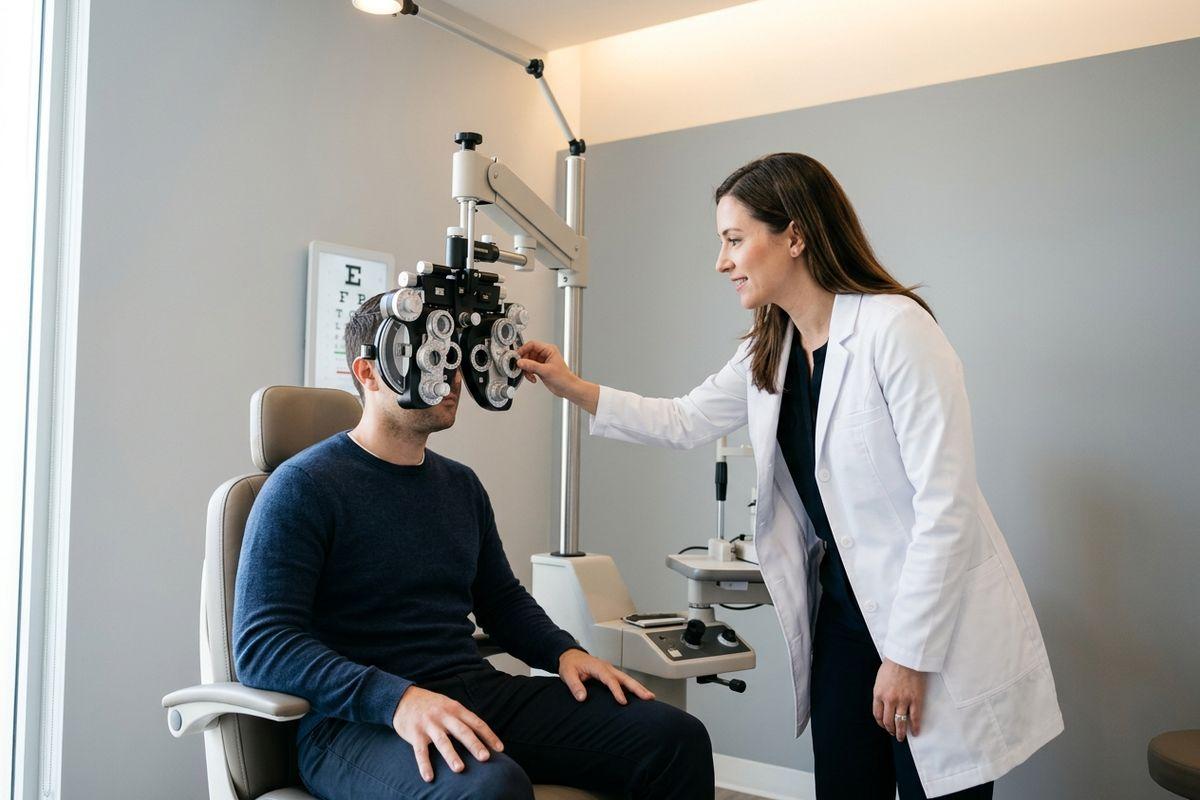
An optometrist starts by checking your vision and updating your prescription if needed. From there, tests can check how well your eyes work together and how well your tear film holds moisture. Your optometrist will also ask about daily habits, from screen use to sleep, to help narrow down what’s leaving your eyes so tired.
Give Your Eyes Something to Look Forward To
Tired eyes at the end of the day aren’t something to just push through, especially if it’s happening more often than not. A comprehensive eye exam can help sort out whether the cause is habit-based, prescription-based, or something that needs ongoing care.
Total Vision Diamond Bar can walk through that with you and build a plan that fits your day-to-day life. Book your comprehensive eye exam and give your eyes a real chance to rest.