

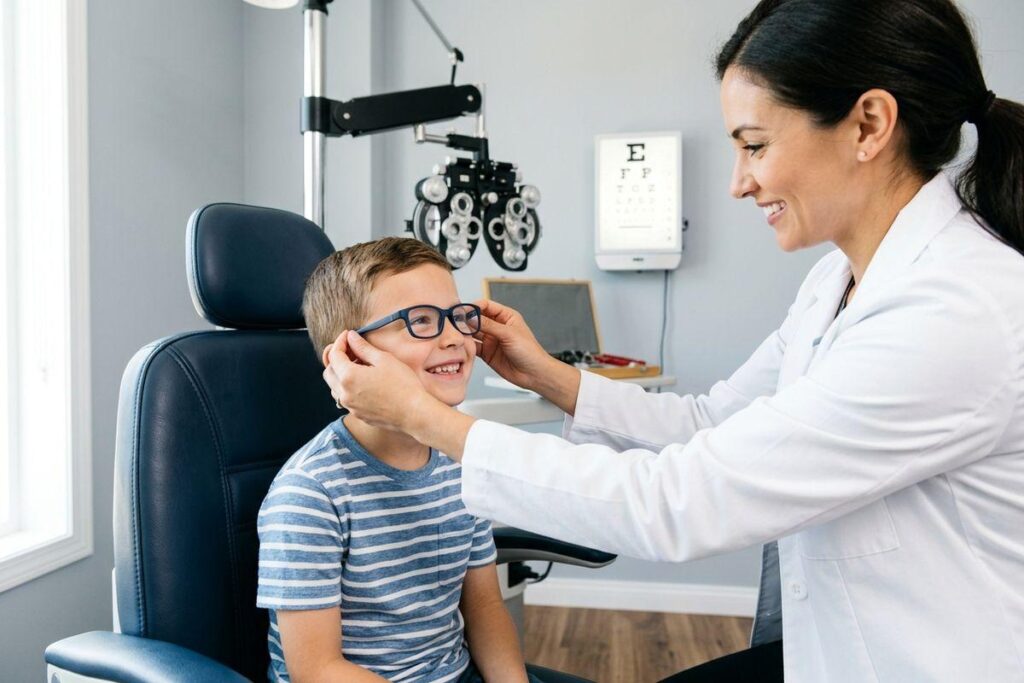
Picking out glasses for your child is a bigger decision than it looks. You’re not just choosing a color or shape. You’re choosing something your child will wear all day, through recess, gym class, and hours of homework.
The right pair comes down to a comfortable fit, sturdy frame materials, impact-resistant lenses, and regular eye exams that keep the prescription and fit on track. So before your next appointment, take a few minutes to browse some kid-friendly frame styles together. It’ll make the whole process faster, and a lot more fun.
Why Frame Fit Matters So Much
Kids won’t wear glasses that pinch, slide, or rub.
A frame that feels good stays put, so your child actually looks at the whiteboard instead of pushing their glasses up all day. Check that their eyes sit centered inside the lenses, not off to one side, and that the bottom edge clears their cheeks. Otherwise every smile smudges the lenses.
Get the Bridge Right
Small noses need a padded bridge to hold the frame’s weight without leaving marks. Skip oversized frames if your child has a stronger prescription. Thicker lenses in a big frame add weight and blur vision near the edges.
Look for Secure Temples
Cable temples wrap gently around the ear and keep glasses from slipping during recess or gym. Adjustable temple tips bend to match your child’s ears now, and again as they grow, so one pair can last longer.
Choose Frame Materials Built for Active Kids
Kids run, tumble, and toss their glasses on the couch without a second thought. Both metal and plastic frames can handle that, though each brings something different to the table.
Plastic tends to be lighter and comes in more colors. Metal offers a slimmer, more grown-up look. Titanium frames stay light and flexible, which helps with all-day wear, and if your child has sensitive skin, ask about hypoallergenic options to cut down on redness behind the ears.
Ask About Spring Hinges
Spring hinges let the temples flex outward instead of snapping when someone yanks the glasses off, or when your child falls asleep still wearing them. Fewer repairs, more days of clear vision. That’s the trade worth making.

Lens Choices for Young Eyes
It’s important to match the frames and lenses you buy to your child’s lifestyle.
Pick Lenses That Can Take a Hit
Polycarbonate and trivex lenses resist impact, so a dropped pair or a stray elbow is a lot less likely to crack them. Look for built-in UV protection and a scratch-resistant coating while you’re at it.
Avoid glass lenses entirely; they shatter more easily and often weigh more than your child needs to carry around on their face.
Bifocals for Eye Crossing
Some kids need extra reading power to manage eye crossing. A bifocal adds that power to the bottom of the lens, with the line typically sitting at the center of the pupil so near work feels easier.
Can Glasses Correct Astigmatism in Kids?
Corrective lenses can sharpen the blurry, stretched vision that comes with astigmatism. Give your child a few weeks to adjust. The world may look slightly different at first, but their eyes will settle into the new prescription.
Add Extra Protection for Sun and Sports
Young eyes soak up a lot of sunlight, so a little extra shielding goes a long way. Consider these options for outdoor play and game days:
- Grab sunglasses that block UV and HEV light on bright days at the park.
- Add sports goggles to guard against jabs, balls, and falls during games.
- Try photochromic lenses, which darken in sunlight and clear up indoors, so one pair covers both.
Smart Tips for Parents and Kids
A little planning helps glasses last, and helps your child actually want to wear them:
- Let your child pick a style they like. They’ll wear it more if they do.
- Ask about frame and lens warranties before you buy.
- Keep a spare pair on hand for mornings when the main pair goes missing. And it will.
How to Care for Glasses
Store glasses in a hard case when they come off, not loose in a backpack. Clean the lenses with a soft lens cloth. Paper towels and shirt hems scratch the coating faster than you’d think.
Schedule regular exams to spot prescription changes early, so your child keeps seeing clearly all school year. An optometrist can also adjust the fit when frames loosen or slide, keeping glasses comfortable as your child grows.
Ready for a Fit That Actually Works?
Picking the right pair takes a little know-how, and the team at Total Vision Diamond Bar is happy to walk you through it. Schedule your child’s eye exam today, and find frames that fit their face, their prescription, and their busy days.