
Some common reasons why you may be blinking so much include:
Eye strain
Dry eye
Allergies
Blepharitis
Facial tics […]
Some common reasons why you may be blinking so much include:
Eye strain
Dry eye
Allergies
Blepharitis
Facial tics […]
If you’re dealing with recurring styles, it’s important to improve your eyelid hygiene. Styes develop when your follicles, glands, or pores become plugged with bacteria or harmful particles, so make sure you’re regularly washing the affected area with gentle soap and water. […]
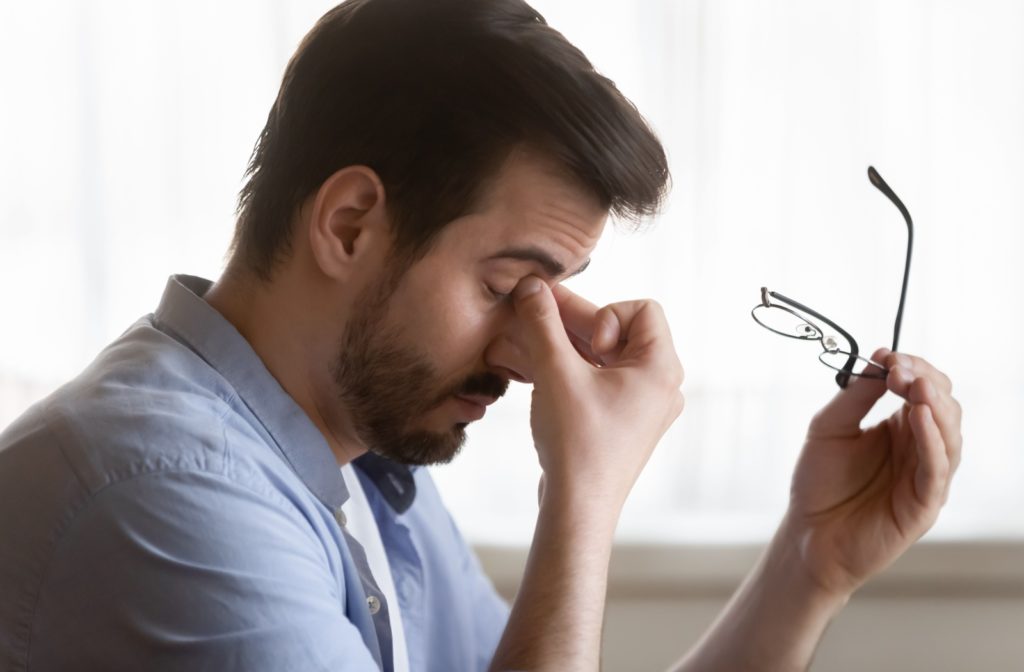
The effects of eye strain caused by digital devices can be effectively treated by taking frequent breaks, blinking more often, and using artificial tears. To prevent eye strain, making small adjustments can help, such as adjusting the screen and your posture, wearing blue light glasses, using proper lighting conditions, and visiting your optometrist for routine eye exams. […]
Myopia, more commonly called nearsightedness, is an extremely common problem known to cause blurry vision. However, it’s about much more […]
It’s not simply a matter of popping scleral lenses the way you might with standard contact lenses; time, precision, patience, and the three-finger tripod method will make the insertion process much easier. Your optometrist can arrange a special contact-lens fitting session to guide you through the process and make sure you’re comfortable getting the lenses in and out before you take them home. […]
Yes, you can wear contact lenses for astigmatism, a refractive error that causes distorted vision. […]
Some people may get up to a year’s wear, while others may have to replace them every 3–6 months. In some cases, the lenses can last up to 3 years. It all depends on the level of care and maintenance the lenses are provided. Even the shape and size of your eyes matter, so it’s recommended that you consult with a professional. […]
Yes, you can wear contacts with dry eyes. There are types and brands of contacts that can be ideal for those with dry eye. […]
LASIK is a common surgical procedure that corrects nearsightedness and farsightedness. […]
n a nutshell, myopia is a vision condition that causes blurry distance vision, and hyperopia is the opposite—it causes blurry vision close up. Their underlying causes are similar, but their effects on your vision differ. […]