


A yawn puts your whole face to work. Your jaw drops, your eyelids clamp shut, and the muscles around your eyes squeeze for a couple of seconds before everything loosens up.
That squeeze has a side effect plenty of people notice. Your eyes water when you yawn because the muscles in your face press on your tear glands, while your closed eyelids keep the extra tears from draining away.
A few tears afterward usually mean nothing is wrong. But if your eyes water through the rest of the day, or you’ve been blinking more than usual, the yawn may be exposing dryness that was already there.
What Happens to Your Eyes During a Yawn
Your tear glands sit under the bone of your brow, just above and slightly outside each eye. All day long, they release a thin layer of moisture across the eye surface, and you never feel it happen.
Clamping your eyelids shut puts pressure on those glands and pushes out more fluid at once. Tears normally leave through 2 small openings near the inner corner of each eye, which drain down into your nose.
Shut eyelids narrow that exit. So the tears collect along your lash line and spill over instead. Blink a few times and the pressure eases, and the extra fluid finds the drain again.
Common Reasons Behind Watery Eyes and Yawning
The yawn itself starts the tearing, but a few everyday things can make it more noticeable.
Tiredness and Eye Fatigue
Long hours on a screen leave your eyes dry and strained. When you’re tired, you blink less, so your eyes lose moisture. Your body responds by making more tears to add moisture back. Pair that with a yawn, and the tears come pouring out.
Dry Eye and Everyday Irritants
How much moisture your eyes keep depends a lot on what’s around them. Several everyday things strip that moisture away and leave your eyes primed to overflow at the next yawn:
- Wind, air conditioning, or a fan pointed at your face
- Dust, pollen, and smoke drifting through the air
- Contact lenses worn past their replacement schedule
- Low humidity indoors once the heat comes on
- Ongoing dry eye that keeps the tear film unstable
Run a humidifier in the room where you spend the most time. Angling vents away from your face can help as well.
Is It Normal for Your Eyes to Water Every Time?
Not everyone tears up when they yawn, and that’s fine. Some people cry a little with every yawn, while others rarely notice a drop.
Anatomy accounts for part of the difference. Eyelids vary in how tightly they close, and drainage ducts vary in width.
Dry air, a short night of sleep, or an afternoon of digital eye strain can change whether your tears water from one morning to the next. Tear production also tends to drop off with age, so yawns that never used to water your eyes might start to.
Ways to Reduce Tearing When You Yawn
You can’t stop reflex tears completely, and you wouldn’t want to. But a few habits can keep the overflow from showing up quite so often.
Reach for preservative-free artificial tears once or twice a day if your eyes feel gritty by mid-afternoon. Most drops of that kind are safe for daily use, though redness-relief formulas work differently and can leave you drier than before.
Try a few of these if the tearing bothers you:
- Let your eyelids close gently during a yawn rather than clenching them
- Keep your jaw relaxed instead of stretching it as wide as it goes
- Hold a warm compress over closed eyes for 5 minutes in the evening
- Aim for 7 to 8 hours of sleep so the yawns come less often
When Watery Eyes Call for an Optometrist
Tearing by itself rarely points to anything serious. Pay closer attention when other symptoms come along with it:
- Watering that keeps going long after the yawn has passed
- Burning or stinging that lasts through the day
- Blurriness that clears the moment you blink
- Crusting or discharge along your lashes
- Swelling near the inner corner of your eye
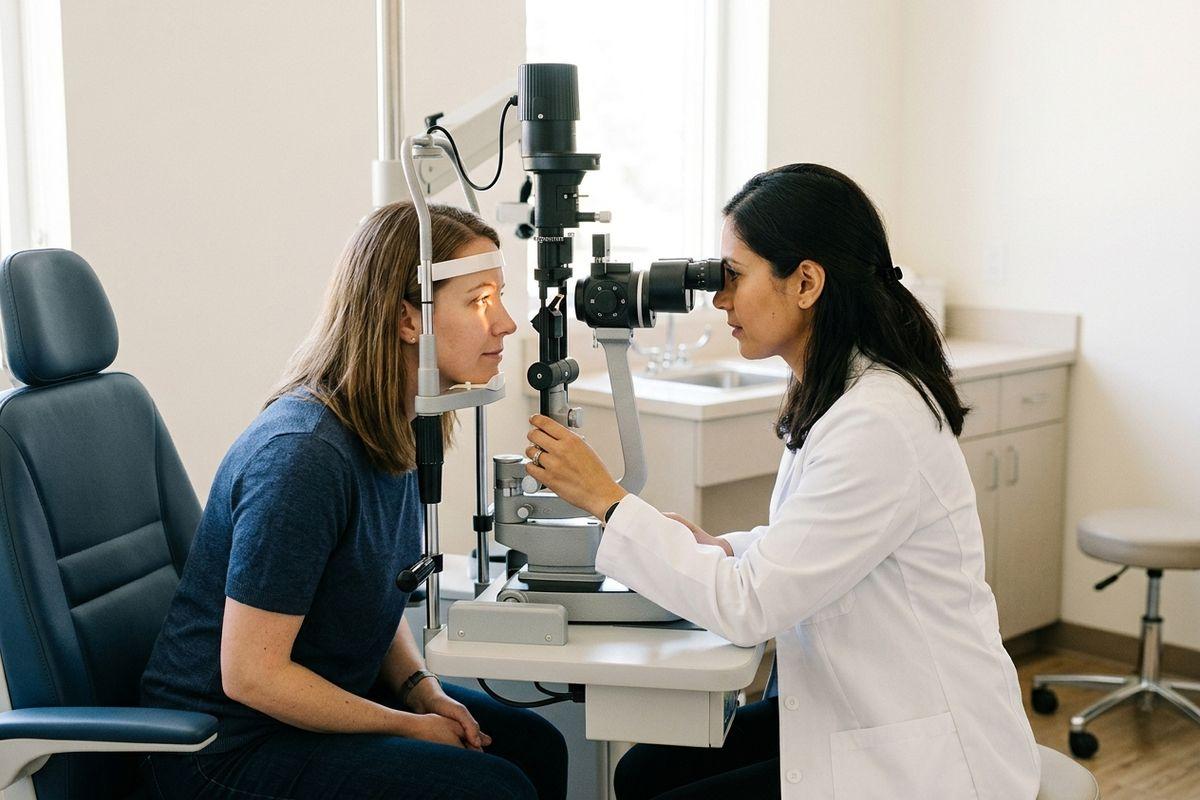
Constant watering can trace back to a blocked tear duct or to inflammation that keeps your tear film from staying put. A comprehensive eye exam can show how well your tears drain and whether the surface of your eye holds moisture between blinks.
Allergies and eyelid irritation often overlap with dryness, and treating one without the other tends to leave you back where you started. Bring it up with an optometrist who can take a closer look if the tearing has been going on for weeks.
What Your Watery Yawns Are Telling You
A few tears at the end of a yawn are just your face doing its job. Watering that continues all day, yawn or no yawn, is worth a conversation.
We care for every age under one roof, from first exams through retirement, and dryness turns up at every stage. Our team at Total Vision Diamond Bar can check how your tears are working and build a plan around what you’re dealing with.
Book an appointment and get a clear answer about the tears.